

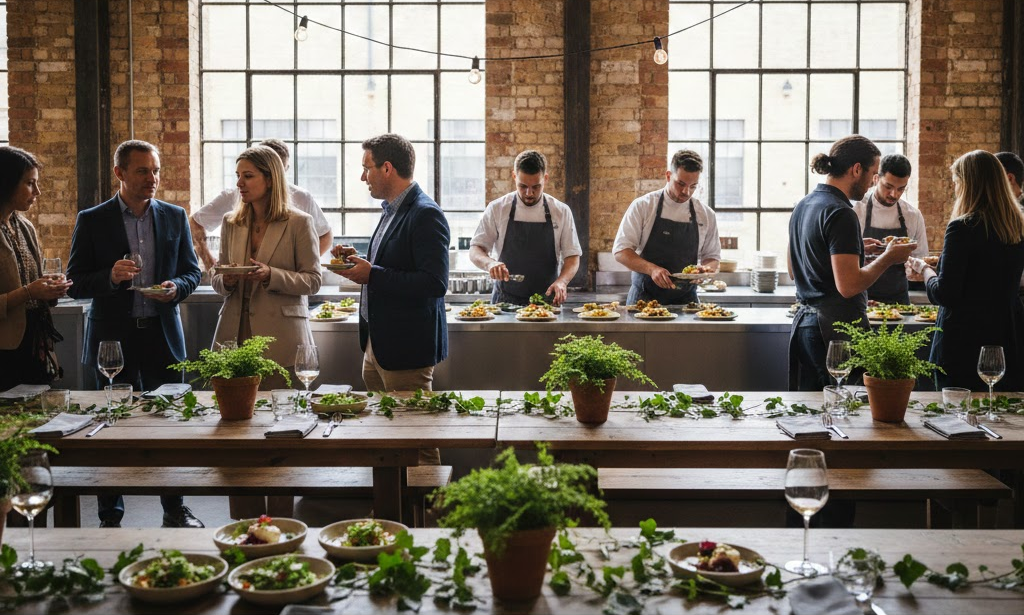
Events in London feel different. Spaces are often small, and choices are made carefully. Food now plays a vital role in how guests move, take breaks, and connect during an event.
In galleries, warehouses, studios, and mixed-use venues, catering reflects the city’s changes. The layout and flow affect decisions, and reducing waste has become a basic expectation. Guests want food that feels thoughtful and matches the setting, rather than clashing with it.
For event planners, these changes impact allocations, layouts, and guest satisfaction. Catering choices now influence the atmosphere as much as design and lighting do.
At Slug and Squirrel, we help create events where catering enhances the experience from beginning to end. Below are 10 catering trends shaping modern events in London, informed by real venue use and changing guest expectations.
Catering Trends Shaping London Events
Here are the ten catering trends that are shaping London events:
1. Growing Food Inside Event Venues
The use of indoor farming in hospitality is no longer theoretical. As per The Caterer, a new food and events venue in East London is set to feature the UK’s first commercial indoor vertical farm, designed to supply fresh produce directly to its restaurants and cookery school kitchens.
The project highlights how food venues are beginning to integrate growing systems into their operations to improve consistency, freshness, and control over supply.
While large, purpose-built venues are one way this model is emerging, similar principles are being explored across catering and food service in more modular ways, particularly in dense urban environments where outdoor growing space is limited.
Companies like growspec.co.uk are offering aeroponic indoor farming systems, where plants are grown without soil and nourished through a fine mist of nutrients. This approach reflects a broader change toward controlled, space-efficient growing methods that can support year-round production for food service and event suppliers.
2. Smaller Venues With Sharper Focus
Menus are shorter now, making it easier to make choices. Caterers limit their options to concentrate on quality and timely service. Seasonal options help guide decisions and encourage creativity.
Visitors notice confidence in moderation. Fewer choices lead to less waste and lower service demands while also reinforcing identity.
3. Catering Built Around Non-Traditional Venues
Events in London usually do not happen in traditional ballrooms. Instead, they are often held in places like galleries, rooftops, studios, and warehouses. This variety influences how catering is organised and delivered.
Since kitchens are often temporary, electricity is limited, and access can be restricted, the menu options are impacted from the start. Catering in these spaces usually prefers flexible formats instead of strict planning.
4. Sustainability As Standard Practice
Sustainability is now seen as essential. Operational defaults manage waste, sourcing, and services effectively.
Reusable plates, local supply networks, and simple menus are now common at events. Visitors see these choices as standard practices rather than explanations.
To explore how sustainability now functions as standard practice in catering operations, see this sustainable catering guide outlining practical changes across sourcing, waste, and service.
5. Open Kitchens And Visible Preparation
Clarity is essential. Guests can see final adjustments and the setup happening in actual time.
A report by Bidfood illustrates that 61.2% of UK consumers say their experiences affect where they choose to eat. This highlights the importance of open kitchens and visible food preparation at events in London.
When guests can see the cooking process, they feel more engaged and confident about the food preparation.
Being open helps build trust while maintaining good performance. Chefs work in view of the visitors instead of hiding away.
Open service also raises the bar for the people delivering it. Catering recruiters such as KSB Recruitment see venues placing greater weight on chefs and front-of-house staff who are as comfortable working in view of guests as they are behind the scenes.
6. Dedicated Mocktail Bars
Non-alcoholic options are now well-respected. Mocktail bars operate on their own rather than as an afterthought.
Recipes that focus on taste, fresh ingredients, and careful presentation attract a wide range of guests. The social atmosphere remains friendly and inviting.
7. Evolving Cocktails
Cocktails are shifting beyond just traditional recipes. Menus now reflect colour schemes, seasonal themes, and the venue’s atmosphere. This change is related to drinking habits.
In the UK, 53% of adults have tried low or no-alcohol drinks like beer, wine, cider, spirits, or cocktails in the past year. This market is worth £413 million. It shows how people’s drinking habits are changing at events.
Non-alcoholic choices allow for longer events and motivate more people to participate. Bars also serve as design features in the space.
8. Local Ingredients, Global Flavour
London is a global city. Its menus show a mix of cultures through careful changes.
Street food has a polished and balanced impact. Familiar flavours are improved without being overpowering.
9. Time-Based Catering Formats
Catering matches the event’s pace. Morning hours highlight lighter plates. As the day goes on, the food becomes more complex.
The food provides energy without interrupting the event’s flow.
10. Food Designed For Movement
London hosts many prominent events. Guests communicate and explore. Movement comes first, with food designed to fit around it.
Small dishes, wrapped bites, and easy-to-hold servings create a smooth experience. The focus is on a simple presentation rather than a formal style.
Conclusion
Modern catering in London focuses on control, intention, and balance. Food should boost the event without taking over the space. Every option, from the menu size to the way food is served, affects the event’s atmosphere.
Catering now plays an important role in London events. It influences the mood, guest behaviour, and overall outcome. When food aligns with the venue and purpose, the experience feels smooth and well-thought-out.
